
Tajdeed-e-Nikah in Islam: Meaning, Method & When It Is Needed
Updated 17 September 2026 — Hanafi perspective, fresh Nikah requirements and Pakistan legal-documentation guidance
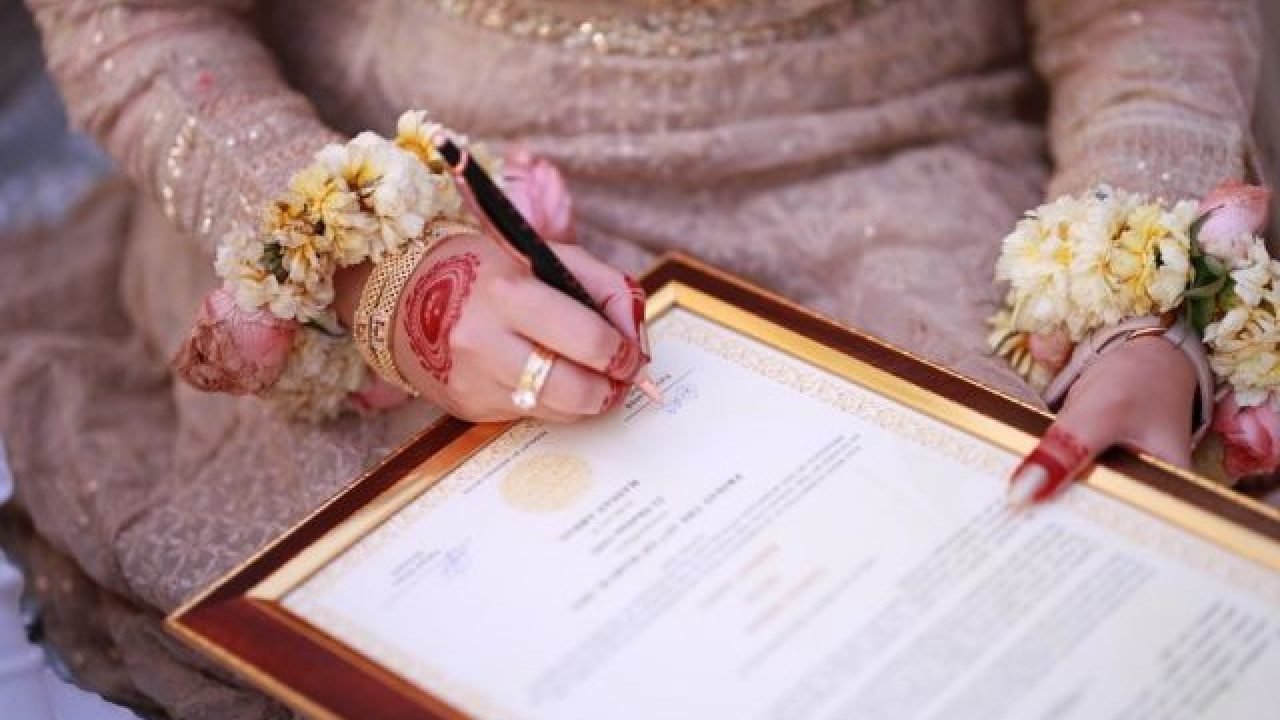
Tajdeed-e-Nikah means renewing the Nikah between the same husband and wife. It should not be presented as a routine romantic “vow renewal” that every married couple is religiously expected to perform. In Hanafi jurisprudence, the reason for renewal matters: sometimes a fresh Nikah may be required after the earlier marital bond has ended in a legally recognised way; in other situations a couple may renew Nikah merely as a precaution without admitting that the first Nikah was invalid.
Because questions about Tajdeed-e-Nikah often arise after statements concerning Talaq, faith, separation or doubts about an earlier Nikah, couples should avoid diagnosing their own marital status from a short social-media answer. The exact words used, intention where legally relevant, number and type of Talaqs, dates and any official divorce process can materially change the answer.
What Does Tajdeed-e-Nikah Mean?
“Tajdeed” means renewal. Tajdeed-e-Nikah therefore means entering into or repeating a Nikah contract between spouses who were already married to one another. The legal effect depends on the situation in which the renewal is undertaken.
Hanafi jurists discuss renewal in more than one context. A couple may renew as an ihtiyat (precautionary measure) even though they do not regard the existing marriage as void. In a different case, a fresh Nikah may be necessary because a prior marital bond has terminated and the couple are legally permitted to marry one another again.
When May Tajdeed-e-Nikah Be Needed?
After One or Two Effective Divorces Where a Fresh Nikah Is Legally Required
Where the marital relationship has ended through a form of divorce after which reconciliation cannot occur merely by a simple revocation, a fresh Nikah may be required if the parties are otherwise legally permitted to remarry one another. Hanafi rulings distinguish this from a revocable Talaq during the period in which the husband may lawfully revoke the divorce.
Pakistan’s civil-law position must also be checked. Section 7 of the Muslim Family Laws Ordinance, 1961 regulates notice and effectiveness of Talaq, and states that a woman whose marriage has been terminated by an effective Talaq is not barred from remarrying the same husband without an intervening marriage unless the termination is for the third time so effective.
As a Precautionary Measure
Hanafi authorities also discuss renewal of Nikah as a precautionary measure. In that situation, the couple is not necessarily declaring that the original marriage ceased to exist. The legal ruling concerning a fresh Mahr can differ from a case in which an entirely new marriage is being contracted after termination of the first.
After a Serious Religious-Law Question About Words or Conduct
Some Tajdeed-e-Nikah questions arise after allegedly blasphemous or faith-negating words. This is a specialised religious question and should not be resolved from generic website text. Whether a statement has any effect on faith or marriage requires qualified religious advice based on the exact words and circumstances. A lawyer should separately review any Pakistani civil-status consequences.
When Is Tajdeed-e-Nikah Not Automatically Necessary?
Ordinary marital disagreements, passage of time, reduced affection, living separately for work, or simply wanting to “refresh” a relationship do not by themselves prove that the original Nikah has ended. Tajdeed-e-Nikah can be undertaken in a permissible precautionary context according to relevant scholarly guidance, but it should not be marketed as a mandatory periodic ritual for every married couple.
If a couple merely wants to recommit emotionally, they may improve communication, fulfil marital rights and make lawful supplications without creating the impression that their valid Nikah has somehow expired.
How Is Tajdeed-e-Nikah Performed?
Where a fresh Nikah is required under Hanafi law, the process follows the essential requirements of a new Nikah. This includes a valid offer and acceptance and the required witnesses. The spouses may act themselves or through properly authorised representatives where the applicable rules permit.
Ijab and Qubool
There must be clear words creating the marriage contract, not merely a future promise or casual discussion about marrying. Hanafi sources emphasise that the offer and acceptance must amount to an actual contract.
Witnesses
Under Hanafi jurisprudence, witnesses are required for the Nikah. A Darul Uloom Deoband ruling concerning Tajdeed-e-Nikah expressly states that faith may be renewed without witnesses, but Nikah cannot be renewed without witnesses.
Mahr
Mahr must be treated according to the reason for the fresh Nikah. A Hanafi ruling from FatwaCentre explains that where a couple renews merely as a precaution and not because the marriage became void, a new Mahr is not necessarily stipulated. By contrast, where the parties are entering a fresh marriage after a termination that requires a new Nikah, the Mahr terms of the new contract must be addressed properly.
For the Pakistani law of dower, see our Mehar (Mahr) in Islam and Pakistan guide.
Does Tajdeed-e-Nikah Require the Wife’s Father or Wali?
This question depends on the school of law and the circumstances of the parties. Under the Hanafi position commonly applied in Pakistan, an adult sane woman has recognised contractual capacity subject to Hanafi rules concerning suitability and other matters. Other Sunni schools have different wali requirements. Therefore, the page should not claim one universal rule for all Muslims.
Where a family dispute, age issue, inter-sect marriage or cross-border situation exists, the particular fiqh position and Pakistani law should both be reviewed before the ceremony.
Does Tajdeed-e-Nikah Need a New Nikah Nama in Pakistan?
Not every religious precautionary renewal should automatically generate a second civil marriage record. If the original marriage remains legally subsisting and the couple merely repeats Nikah as a religious precaution, creating a duplicate or inconsistent official registration can cause documentary problems rather than solve them.
On the other hand, where the first marriage has legally terminated and the couple contracts a genuinely new marriage, the fresh marriage should be documented and registered according to the applicable Pakistani law. Section 5 of the Muslim Family Laws Ordinance, 1961 requires marriages solemnised under Muslim law to be registered in accordance with the Ordinance.
The correct approach is to inspect the original Nikah Nama, any Talaq notice or divorce certificate, Family Court decree if applicable, and the reason for Tajdeed before deciding whether a fresh statutory registration is required.
Tajdeed-e-Nikah After Talaq: Do Not Ignore Pakistan’s 90-Day Legal Process
Religious classifications of Talaq and Pakistan’s statutory procedure must both be considered. Under section 7 of the Muslim Family Laws Ordinance, a husband who pronounces Talaq must give written notice to the Chairman and supply a copy to the wife. Subject to the statutory provisions, Talaq does not become effective until the prescribed 90-day period from delivery of notice has expired.
Accordingly, a couple should not simply perform Tajdeed-e-Nikah after hearing the word “Talaq” without first determining the religious classification and the legal status of the existing marriage under Pakistani law.
Can Tajdeed-e-Nikah Be Done Privately?
Privacy is possible so far as religious requirements and applicable law allow, but “private” does not mean omitting essential requirements. For a Hanafi Nikah, the required witnesses cannot be discarded merely because the couple wants secrecy. Where fresh civil registration is legally required, registration requirements also cannot be avoided for privacy.
Can Tajdeed-e-Nikah Be Performed Online?
Remote participation can be possible in some circumstances through valid representation or a properly structured remote process, but identity, authority, offer and acceptance, witnesses and registration must all be handled correctly. A generic video call should not automatically be assumed to constitute a valid or registrable Nikah.
For remote-marriage issues, see our Online Nikah guide.
Tajdeed-e-Nikah and Nikah Registration in Pakistan
The safest documentation approach depends on whether the existing marriage is still legally subsisting. If it is, a lawyer should avoid creating duplicate certificates simply to mirror a religious precaution. If the prior marriage has ended and a new Nikah is legally permitted, the fresh Nikah Nama and registration should accurately reflect the new marriage.
For the marriage contract itself, see our Nikah Nama guide.
Frequently Asked Questions About Tajdeed-e-Nikah
Does Tajdeed-e-Nikah mean the first Nikah was invalid?
No. A couple may renew Nikah as a precaution without asserting that the original Nikah was invalid. In other cases, a genuinely fresh Nikah may be needed because the earlier marriage has terminated.
Is Tajdeed-e-Nikah a compulsory anniversary ceremony?
No. It should not be described as a mandatory annual or periodic vow-renewal ritual for every married couple.
Are witnesses required for Tajdeed-e-Nikah?
Under Hanafi jurisprudence, witnesses are required when the Nikah is renewed.
Is a new Mahr always compulsory in precautionary Tajdeed-e-Nikah?
Not necessarily. Hanafi authorities distinguish precautionary renewal from a genuinely new Nikah after termination of the first marriage. The reason for renewal must be identified before deciding the Mahr consequence.
Can spouses remarry each other after one or two effective Talaqs?
Depending on the form and legal effectiveness of the divorce, a fresh Nikah may permit remarriage. Section 7(6) of Pakistan’s Muslim Family Laws Ordinance also provides that an intervening marriage is not required unless termination is for the third time so effective.
Should a second Nikah Nama always be registered for Tajdeed-e-Nikah?
No. If the original civil marriage remains subsisting and Tajdeed is only precautionary, duplicate registration may create inconsistencies. If a legally new marriage is being contracted after termination, proper fresh registration may be required.
Can Tajdeed-e-Nikah solve an unclear Talaq dispute?
It should not be used as a shortcut without first determining what happened. The exact Talaq words, number of pronouncements, dates, notice process and religious classification should be reviewed.
Religious and Legal Sources
Hanafi FatwaCentre — reasons and rules for renewing Nikah
Darul Uloom Deoband — witnesses for Tajdeed-e-Nikah
Pakistan Code — Muslim Family Laws Ordinance, 1961
Updated: 17 September 2026. This page gives a general Hanafi-oriented explanation and Pakistan legal-documentation guidance. A disputed Talaq, alleged kufr statement or uncertain marital status requires individual religious and legal review.